
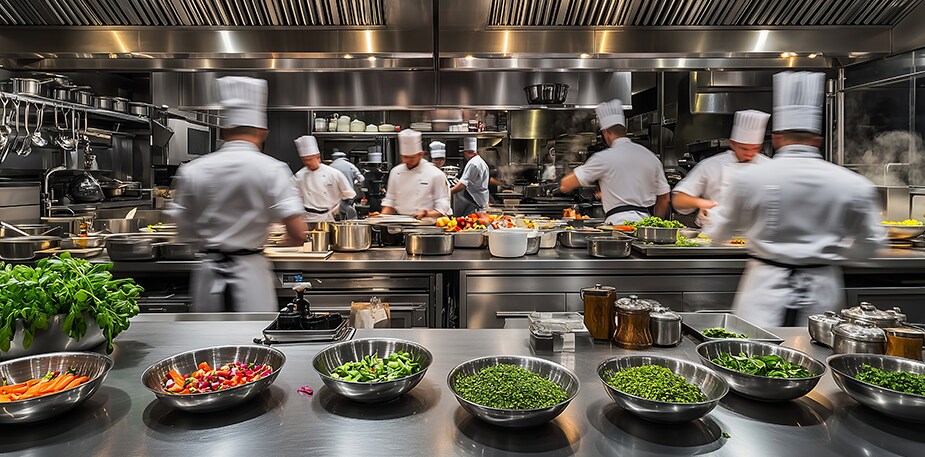
During Ramadan, service windows tighten into a short, high‑pressure period around Iftar. The right planning keeps your kitchen efficient, your team safe, and your operation running calmly despite the rush.
Build a Ramadan‑Ready Roster
A smart roster ensures coverage without burnout. Stagger shifts into 2 -3 waves: prep, pre‑Iftar service, and post‑Iftar cleanup or suhoor prep. Teams should have fixed 5 -10 minute prayer and hydration breaks after Maghrib, rotated fairly across stations. Each station: fry, grill, garde manger, pass, expo, and delivery, should have a clear owner, with at least one trained backup for every critical position.
Shift Blocks Template:
Block 1 (10am–4pm): Prepare sauces, par‑cook proteins, doughs, desserts, and packaging.
Block 2 (4pm–9pm): Final cooking, quality checks at the pass, and dispatch.
Block 3 (9pm–12am): Cleanup, inventory, and next‑day prep.
Engineer Menus for Low Stress
A streamlined menu reduces chaos. Limit offerings to 10–14 hero items built from shared base components. Cross‑utilize mise en place—one masala base might support three mains; one chutney can pair with multiple snacks. Use proper hot‑holding (≥63°C / 145°F) and cold‑holding (≤5°C / 41°F) for fast service. Reserve cook‑to‑order dishes only for signature items that truly define your brand.
Optimize Kitchen Flow & Communication
A one‑way kitchen flow: Receiving → Prep → Cook → Pass → Dispatch; prevents cross‑traffic and confusion. Assign one expo captain to call tickets, check plating, and pace service. Color‑coded tickets help teams prioritize green for dine‑in, blue for delivery, red for VIP or allergy-sensitive orders. A visible Iftar countdown timer reduces stress and keeps timing aligned.
Support Energy, Morale & Safety
Healthy, hydrated teams perform better. Set up hydration stations with water, ORS, and dates, and encourage slow sipping after Iftar. Begin each shift with an 8‑minute standup to cover the top three priorities, one safety rule, and a positive shout‑out. Manage heat by running fans and hoods at full power and rotating staff off hot stations every 60–90 minutes. Above all, reinforce a no‑blame culture that focuses on solutions instead of fault.


